AI SEO –
GEO website optimization



What is GEO?
GEO website optimization – Generative Engine Optimization – is a set of measures aimed at optimizing a website to increase its visibility and citation in AI chat results or generative models.
GEO aims to ensure that your business is recommended by AI chats that your target audience already uses through text or voice search: GPT, Perplexity, Gemini, Claude, Copilot, Grok, and others.
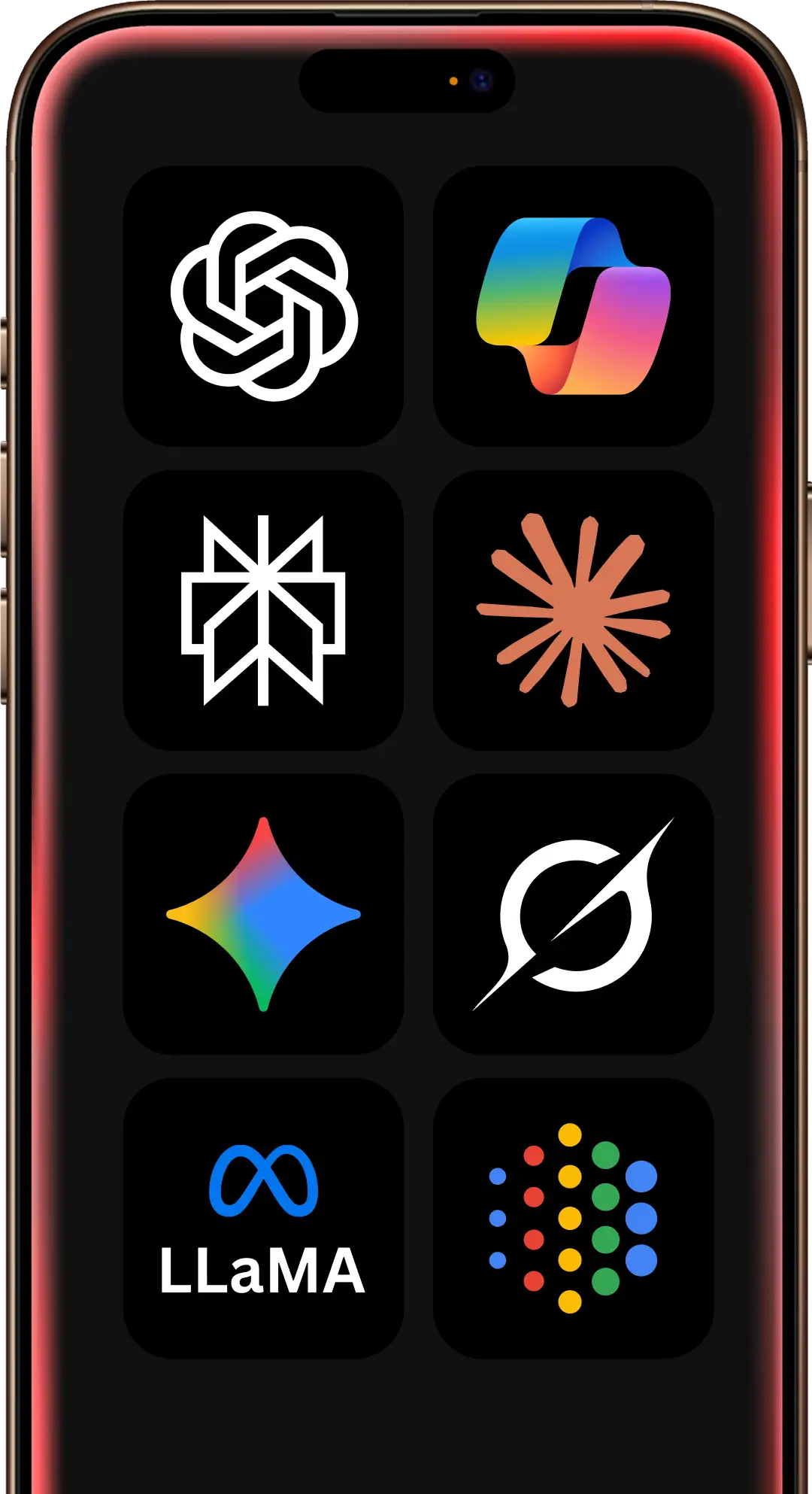

Your audience is already using AI
for 35%
of users
Up to 122 million users
1 billion+ queries
Over 70% of users
Up to 300+ million users
What is the difference between SEO and GEO?
SEO (Search Engine Optimization) and GEO (Generative Engine Optimization) are different approaches to website promotion, adapted to different platforms and technologies.

SEO is aimed at optimizing a website for traditional search engines such as Google, Bing, etc. Its purpose is to improve search engine results page (SERP) rankings and traffic for pages of your website.

Learn more

GEO (AI SEO) focuses on optimizing website content for AI platforms such as ChatGPT, Grok, Perplexity, or Gemini. Its goal is to increase the likelihood that AI chat will include your website in its responses or cite it as a source.
Both concepts complement each other and enhance the effectiveness of online business promotion, both in search engines and in LLM. Without SEO, AI website promotion efforts will be ineffective. Conversely, classic SEO does not cover all the requirements for GPT search optimization.

What do AI assistants pay attention to?
Assistants prefer content with a high E-E-A-T (Experience, Expertise, Authoritativeness, Trustworthiness) score.
Clear content organization: headings, lists, tables, FAQs, use of infographics, videos, checklists, etc.
Site loading speed, mobile responsiveness, and structured data.
Reviews on trusted platforms, media mentions, citations, social media mentions.
Presence in industry directories and company rankings.
Relevance of information and regular updates to meet new requests.

Benefits of GEO
for business

Optimized content is more often cited by AI assistants (e.g., Grok, ChatGPT), attracting new visitors who are looking for services or products through AI-chats.
Personalized AI responses that include your website increase customer trust, which can increase conversion by 30-50% (according to 2024-2025 data).
Effective SEO for artificial intelligence reduces the need for paid advertising, as AI assistants promote relevant content for free.
Responding to current queries (e.g., a 49% increase in queries in Q1) gives you a competitive advantage and increases brand reputation.
For which businesses GEO is most effective
SEO optimization with AI will be the best solution for businesses with an online history, as well as those that are already optimized. If you are just starting out, GEO will only show results in combination with classic SEO.











Why do these businesses benefit from GEO?
Niches with detailed, structured content (education, medicine, real estate) are easily integrated into AI responses.
Local businesses (tourism, e-commerce) gain an advantage through AI geotargeting.
35% of search queries will go to AI chats (2025), allowing you to bypass competition in SERP.
Businesses with E-E-A-T (medicine, finance) meet AI criteria.

How does it work?
SEO optimization for AI adapts to natural language processing (NLP), focusing on semantics, content structure (FAQs, lists), authority, and data uniqueness. This approach is reinforced by classic SEO based on search engine algorithms. They analyze keywords, backlinks, technical aspects (speed, mobility), and behavioral factors (click-through rate, time on site).

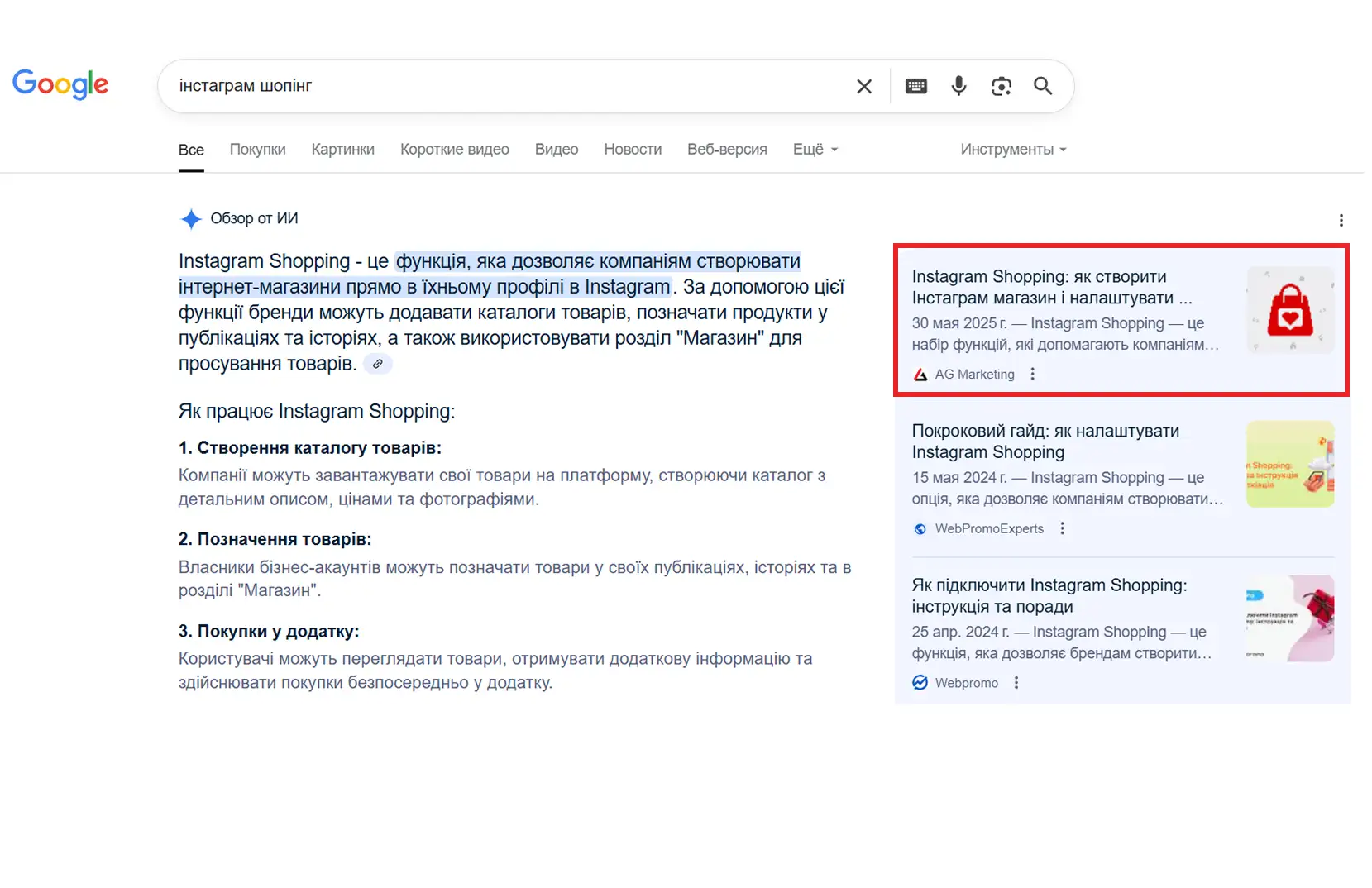
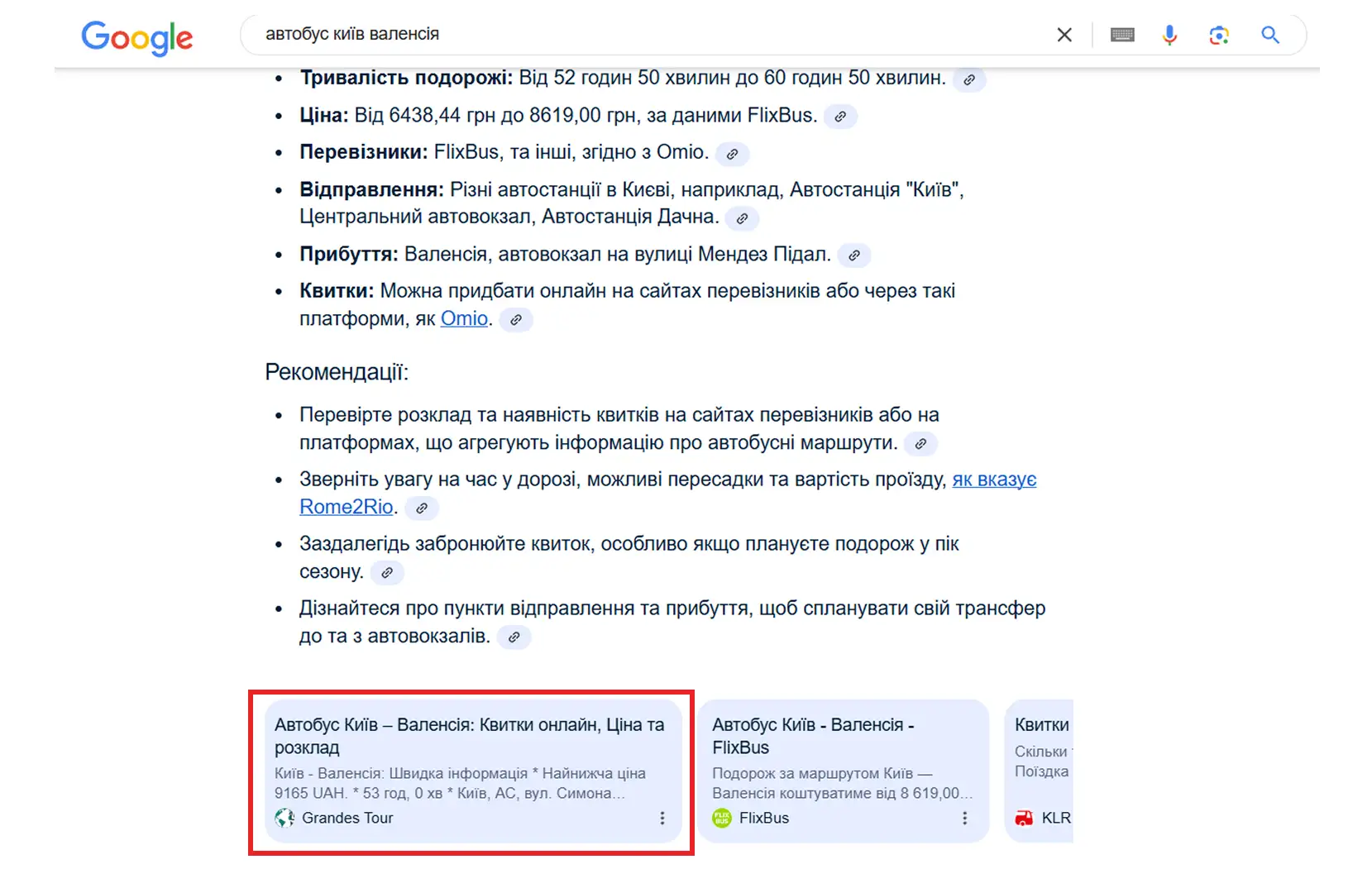
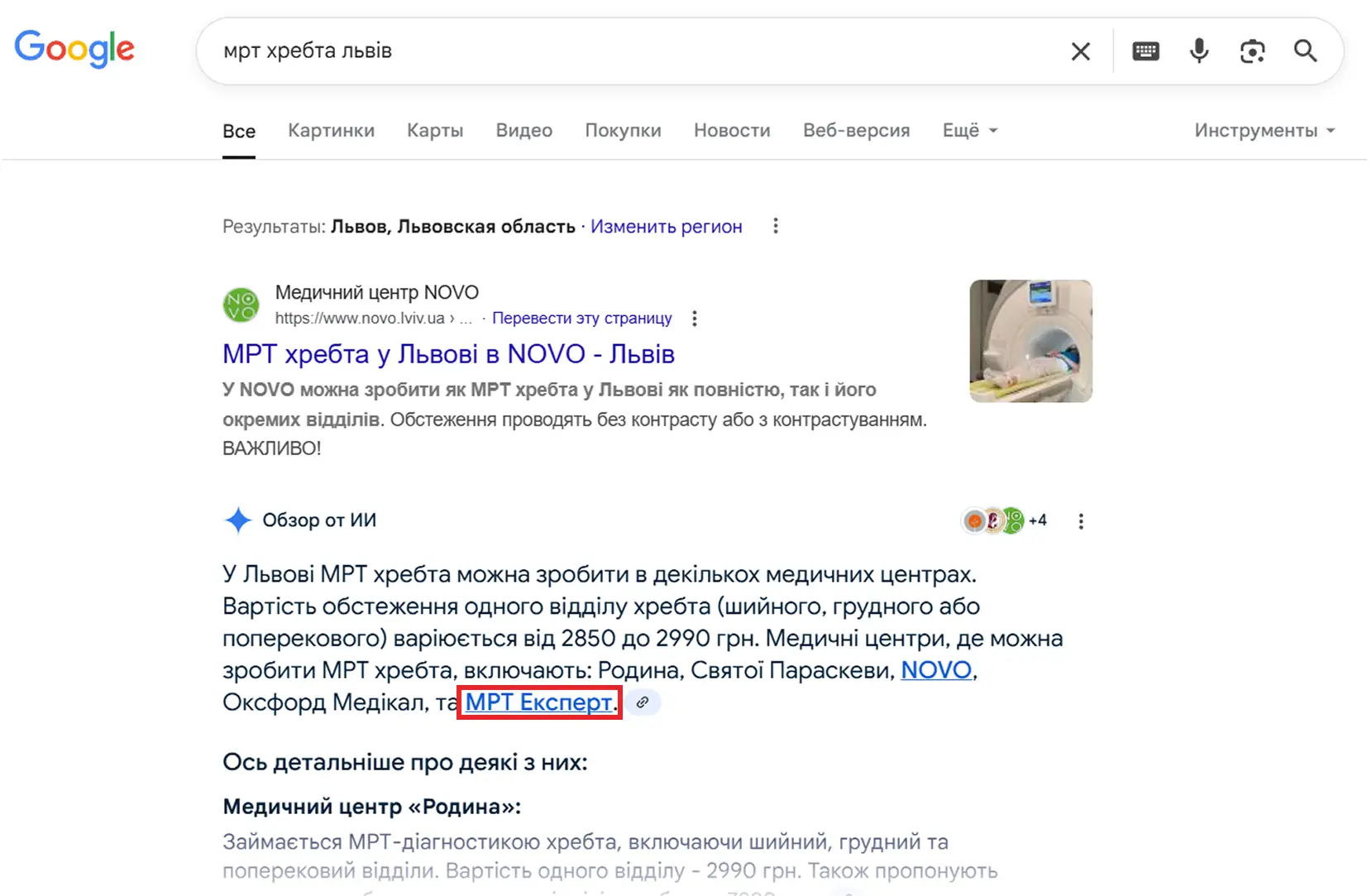
What does an AI SEO service for business include?
AG.Marketing’s AI search SEO services include a full range of services necessary to increase visibility, traffic, and conversions from the most popular AI chats. We combine proven organic promotion techniques and new hypotheses to get more referrals from Google and AI assistants for our clients.

- Target audience analysis: Determining geography (USA, EU), demographics, and interests (e.g., IT, e-commerce).
- Competitor research: Evaluating websites that are already cited by artificial intelligence, with a focus on structure and keywords.
- Semantic core definition: Selection of queries for AI context.
- Technical audit: Checking speed, mobile responsiveness, availability of structured data, etc.
- Content audit: Evaluation of quality (E-E-A-T), uniqueness, and structure of existing content.
- Visibility analysis: Testing AI chat responses (Grok, ChatGPT) for website relevance.
- Content plan creation: Planning articles, FAQs, guides with a focus on AI-friendly format (headings, lists, tables).
- Semantics optimization: Integration of LSI words and natural language for better understanding by artificial intelligence.
- Identification of priority AI platforms: Selection of target chats (e.g., Perplexity for research, Grok for trends).
- Content structuring: Adding subheadings, FAQ blocks, infographics.
- Technical improvements: Implementing Schema markup and optimizing URLs for search algorithms.
- Local SEO for AI: Integrating geo-specific content.
- Developing unique content: Articles with insights, case studies, and data.
- Multimedia content: Adding videos or infographics to increase AI engagement.
- Updating existing materials: Updating old articles/pages as needed.
- Building authority: Getting mentions on authoritative sites, blogs, directories.
- Integration with social platforms: Content recommendations via X for Grok visibility, as well as Meta, YouTube, etc.
- Collaboration with influencers: Engaging experts to strengthen E-E-A-T.
- Testing AI responses: Checking site citations in Grok, ChatGPT, Perplexity.
- Traffic analysis: Tracking session growth through Google Analytics.
- Strategy adjustment: Monthly review and AI SEO optimization based on data.
- Regular updates: Adding fresh data (e.g., trends).
- Technical support: Bug fixes and adaptation to new AI updates.
- Reporting: Regular analytics for the client with recommendations.
Not sure
if your website is ready for SEO optimization for AI?
Get a free consultation from our team with a GEO readiness analysis before ordering website SEO optimization for AI assistants like Perplexity, GPT, and others. Get a step-by-step plan to promote your business in organic search.
Reviews Clutch
We are inspired by the success of our clients