A potential client does not just choose a route or a price – they evaluate comfort and safety, since transportation to Europe takes a long time and includes the border crossing procedure. A carrier contacted us who wanted not only to increase the number of requests but also to establish themselves as a reliable brand in their niche, making marketing more systematic and holistic. In the passenger transportation niche, it is worth paying attention to all possible communication channels: Google search, AI assistants, social media, mobile application, since each segment of the target audience has its own standards of trust and communication.
General Information
- Niche: international bus passenger transportation (Ukraine ↔ Europe).
- Collaboration period: 1 year, project ongoing.
- Services: online marketing strategy development, targeted advertising on Instagram and Facebook, PPC and display ads on Google, SEO strategy, comprehensive SEO promotion.
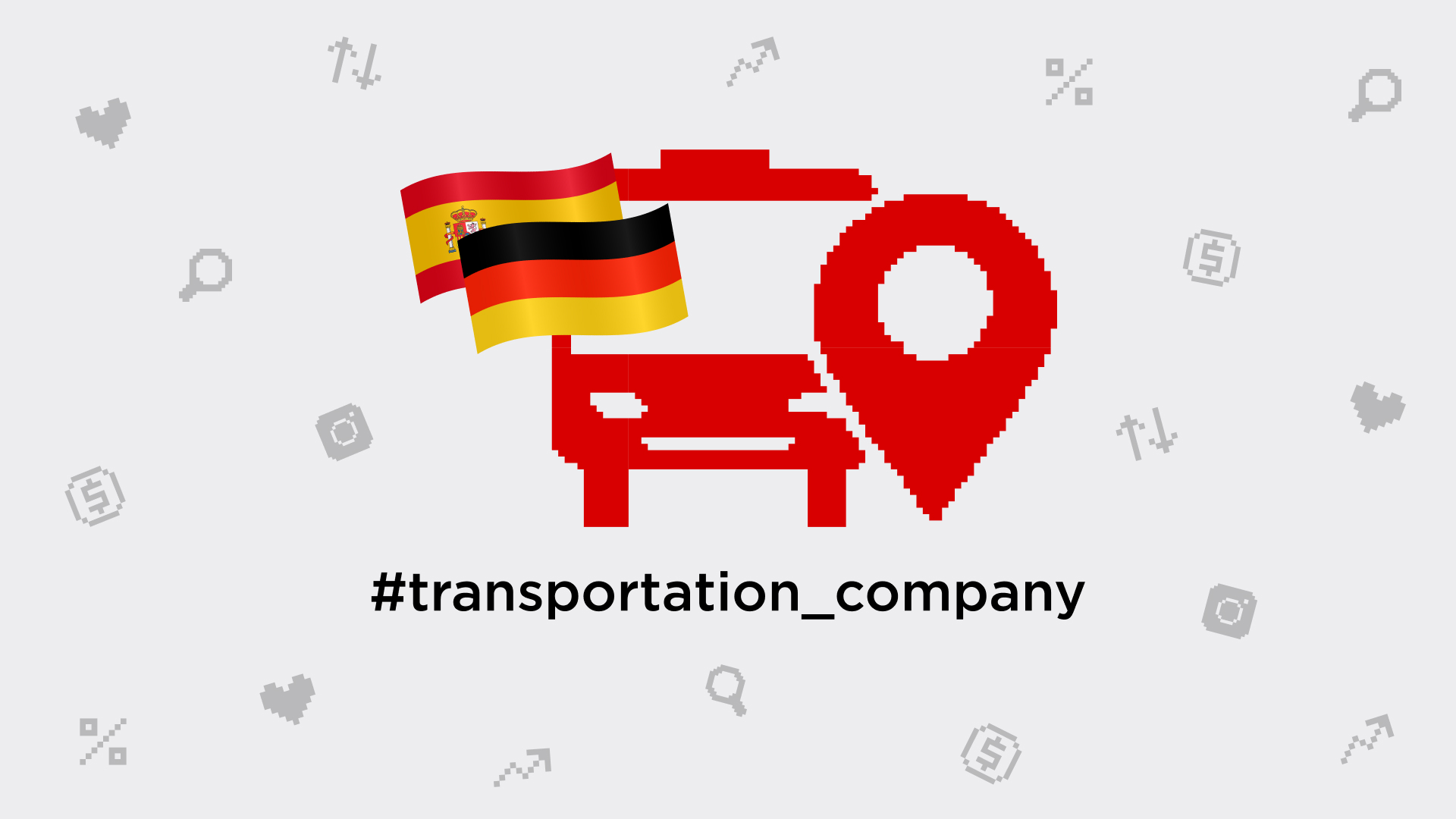
- Region: Ukraine, Germany, Spain.
Initial Situation and Tasks
The international passenger transportation company approached us with a request to develop a comprehensive online marketing strategy. While testing different advertising channels, the company encountered a lack of systematization, overall ToV, and integrity of offers.
It is important for carriers to maintain unified communication across all channels: consistent design code, relevant offer updates in all advertising channels, on the website, and in the application, in order to be recognizable.
At the time of contacting us, the client already had a basic online presence: a website with route schedules, a mobile application, social media pages, but:
- Advertising was not effective enough to maintain a high level of requests from social media and Google search;
- SEO was minimally set up, which was insufficient for competition in the TOP – rankings were at low positions;
- The client wanted to have a stable flow of requests from several channels: Google Ads, social media targeting, organic traffic, as well as quality SEO support so that each investment would pay off;
- The website and application required technical support: regular audits, usability improvements, and technical enhancements to increase the conversion rate.
Taking the initial data into account, we started working on an online marketing strategy that would cover all the most important channels for the business in this niche, as well as answer questions about the key players in the transportation market and their strategies.
Our Solution
Before starting the work, we conducted a detailed briefing with the client. Our task was to clarify all key KPIs, previous advertising and marketing experience in general, business goals for the next 12 months, and other data needed for strategy formation and advertising planning. Our further steps:
- Development of the online marketing strategy with planning of priority promotion channels.
- Creation of media plans: budgets, expected results, offer proposals.
- Website audit and adjustments for proper analytics systems operation.
- Creation of a homepage design mockup and its implementation to improve user experience.
- Formulation of technical tasks for developers to improve interaction with the website and application.
- Setup of Meta Conversion API & Pixel, Google Tag Manager, Google Analytics.
- Creation of graphic materials and videos for targeted advertising, their launch, and optimization.
- Development of materials and launch of Google advertising.
- Formation and implementation of an SEO promotion strategy.
At all stages, we maintain close communication with the client, update offers, and continue optimizing all channels managed by our team.
Development of the Comprehensive Online Marketing Strategy
The online marketing strategy answers critical questions before online promotion and can protect the business from spontaneous, unprofitable decisions. Our online marketing strategy includes:
- Analysis of the company’s online resources: website, application, social media with formation of technical tasks for priority fixes.
- Selection of competitors for analysis and research of their online activity.
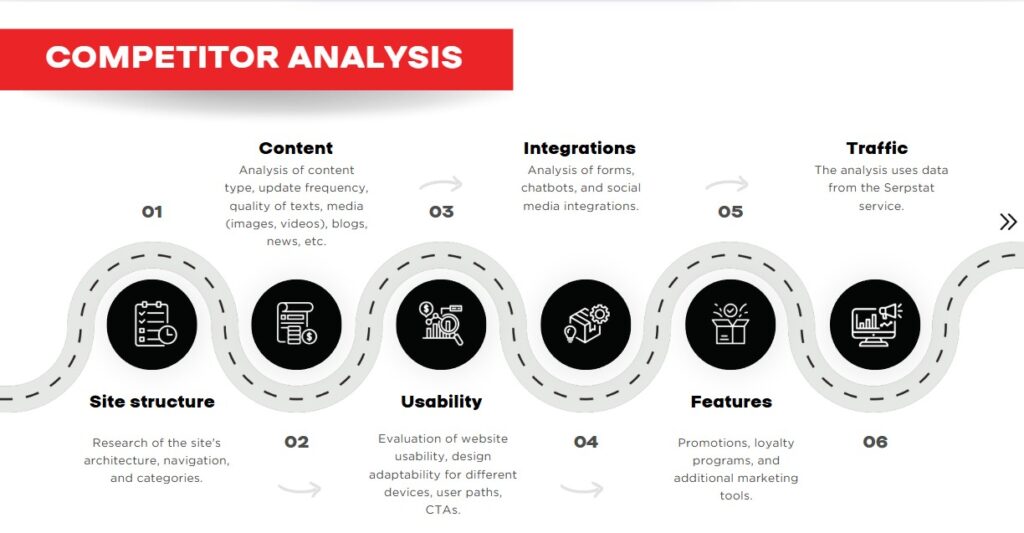
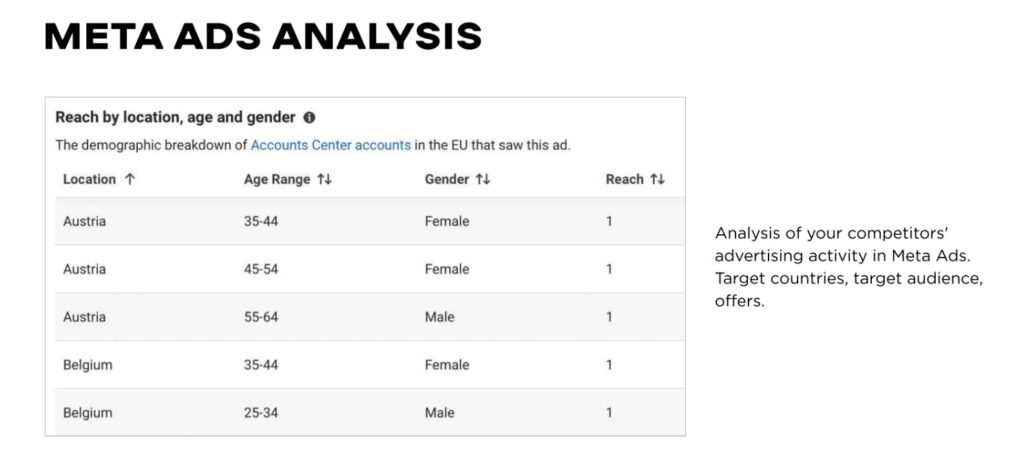
Identification of strengths and weaknesses of competitors, formation of recommendations for the business based on this. Meta Ads strategy: research of competitors using this channel, formation of media plans with budgets and expected results for each location, creation of a targeted advertising funnel.
- Audience segmentation (tourists, students, seasonal workers, diaspora) and analysis of their needs.
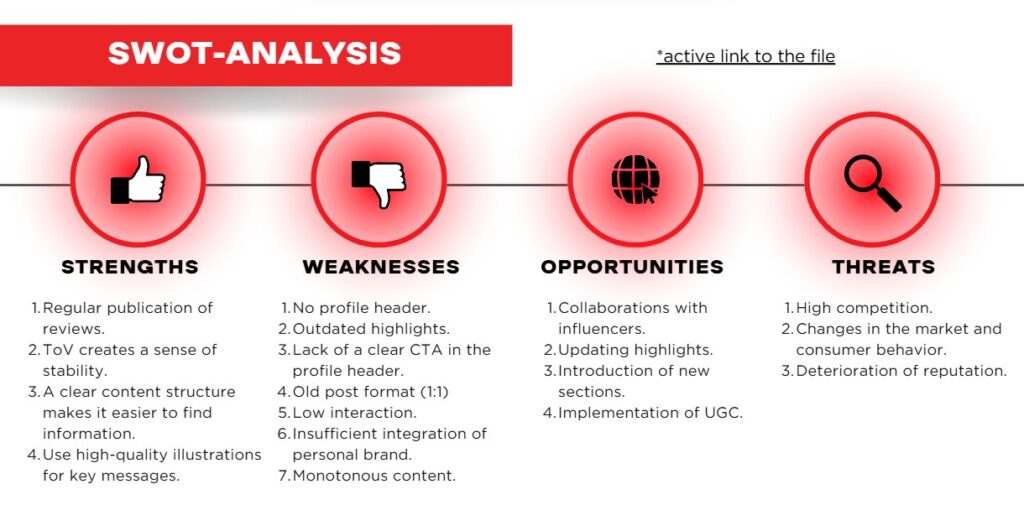
- SMM strategy: analysis of the activity of other carriers on Instagram and Facebook, SWOT-analysis, formation of target audience profiles, Tone of Voice, content strategy.
- Google Ads strategy: research of competitors advertising in Google, selection of ad products, and budget calculation for priority directions.
- Additional recommendations: alternative channels that can be integrated into the main online communications.
- Creation of a roadmap: step-by-step plan for implementing the online strategy to achieve the set KPIs.
Basic SEO-analysis is also included in the strategy; however, a separate SEO-strategy is required to start promotion in Google, which is discussed below. Having presented our vision of the carrier’s comprehensive marketing, we focused on the main selected advertising channels, adapting offers to different segments of the target audience.
Meta Ads for the International Transportation Company
Targeted advertising on Instagram and Facebook was tested for various goals: lead generation from the website, form submissions, messages in Direct/Messenger, as well as campaigns for active page audience growth. Our team creates advertising messages and materials depending on the audience’s needs, season, and client company updates (new promotions, offers, discounts, etc.).
Result:
- After testing all hypotheses and optimizing advertising from Instagram and Facebook, we achieved a stable 400+ inquiries per month in the off-season, and about 1000 per month during the season.
- CTR of developed videos and static creatives: average – 4.35%, maximum – 9.16%.
- Additional micro-conversions: saves, comments, reposts of advertising posts, which contribute to brand awareness and quick ticket sales through processing comments and feedback.
- Audience growth on the carrier’s Instagram page – 600–700+ subscribers monthly.
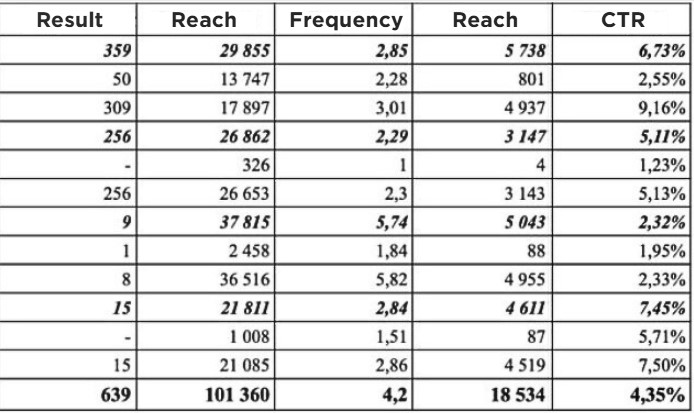
The advertising campaign shows a high level of conversion in all target countries thanks to proper segmentation, setup, and daily optimization. It should be noted that increasing the advertising budget allows multiplying results, which is relevant for peak season months.
Google Ads
We set up PPC for priority directions, as well as ads in the display network and brand campaign. Special attention was paid to the carrier’s advantages, ongoing promotions, cities where the bus stops, and fast online payment.
Results achieved:
- CTR by specific ad groups – 82.35%, overall average across all campaigns – 14.48% over the month.
- On average, 130–160 conversions per month – but must be noticed, advertising in this channel runs on minimal niche budgets with pauses, mostly to support brand queries and main directions.
- Additional micro-conversions: app downloads, transitions to social media, chatbot entries.
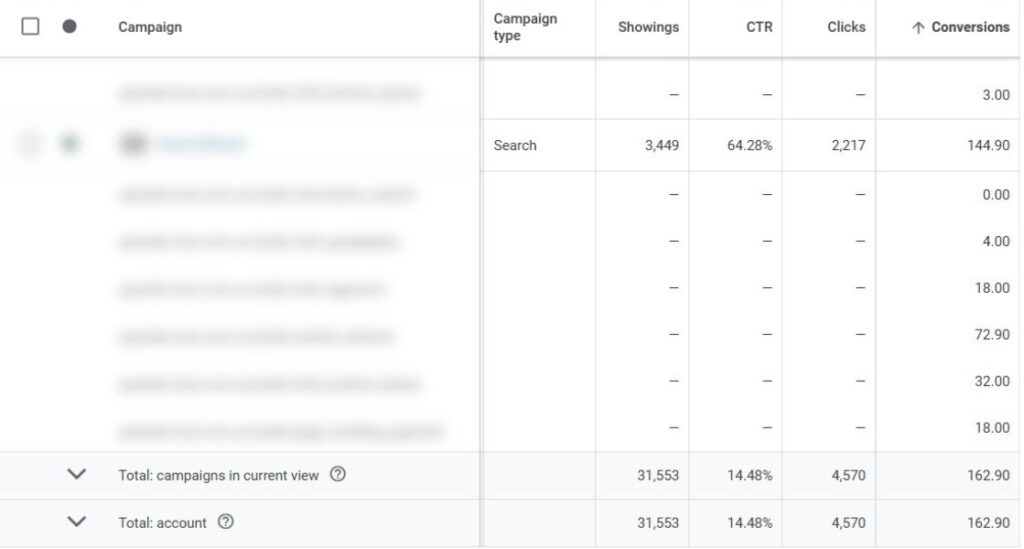
In the future, we plan to expand the Google advertising campaign to promote the client company’s additional online products.
SEO Strategy and Promotion
Work on organic promotion of the international transportation company’s website began with the formation of an SEO-strategy. It includes:
- Website audit: technical problems, speed, mobile version, navigation, usability, SEO indicators with technical task formation for developers.
- Collection and processing of the semantic core: keywords reflecting real client queries, including local and international aspects, their frequency, competitiveness.
- Content plan, formation of a category promotion plan.
- Formation of the website’s SEO structure, convenient for users and search engine bots.
- Analysis of external and internal links, building a link-building strategy.
- Analysis of TOP search results, their promotion strategies, and implemented work.
After approving the strategy and work plan, we started website optimization. Content preparation, link-building, publications, regular SEO audits, and strategy adjustments according to changes in search and user behavior – all this is carried out by the AG.Marketing team. We also closely interact with the client’s development team to implement technical tasks and achieve the best website performance.
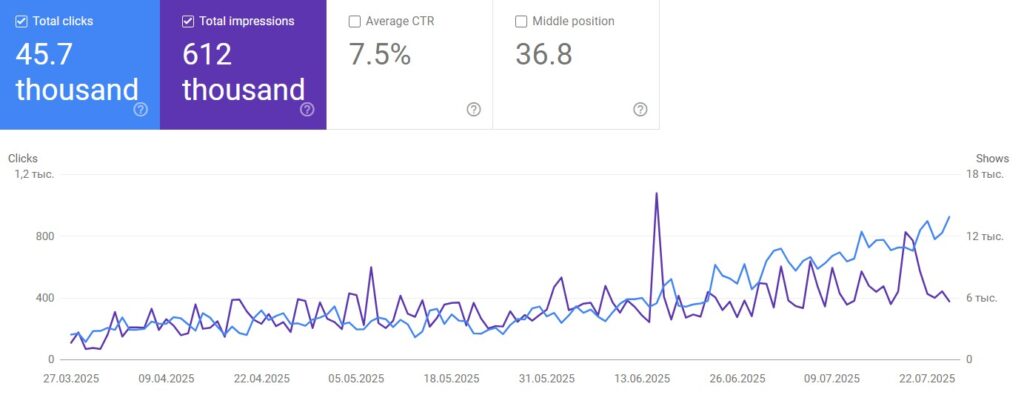
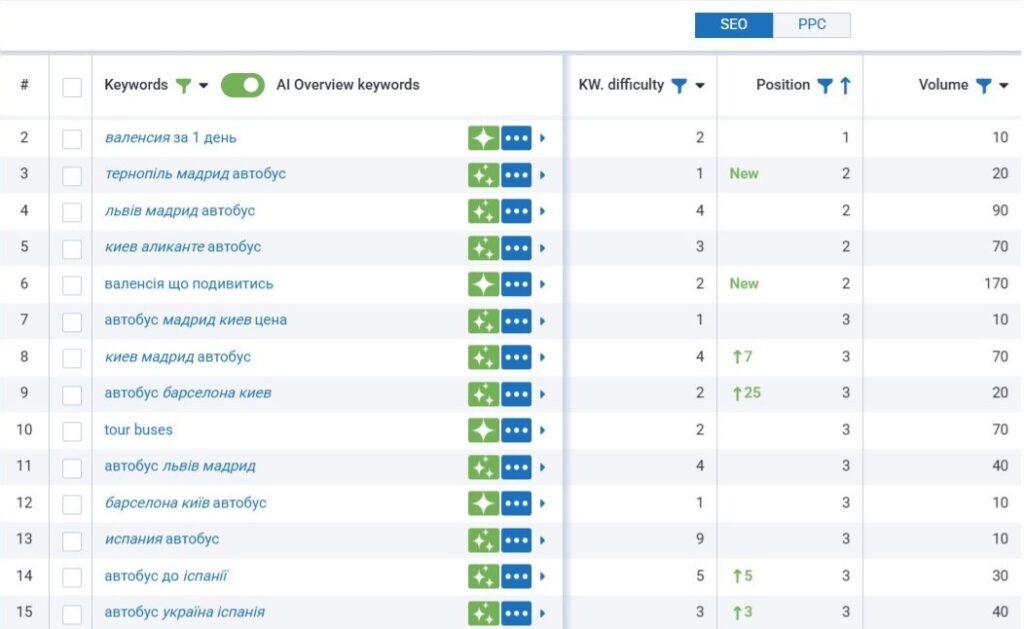
Another of our priorities with the emergence of Google AI Overview was promotion under AI systems and assistants. The client’s website regularly appears in AI recommendations, providing additional traffic from AI chats where the audience searches for convenient bus transportation by City-to-City, Country-to-Country routes.
Year-over-year comparison of identical months shows that organic search traffic increased from 5304 sessions to 9556 sessions per month, according to Google Analytics.
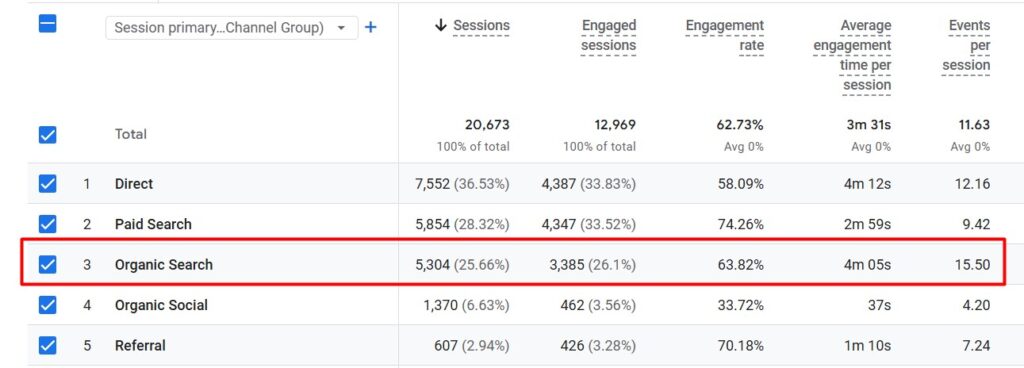
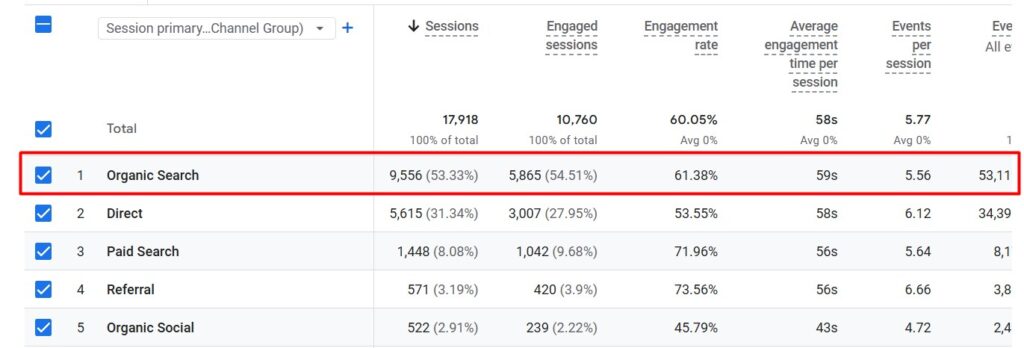
Currently, organic search traffic provides more than 50% of all website visits from all channels monthly, becoming the primary source of ticket bookings. We continue working on pushing priority positions into the TOP, link-building, and managing the client’s online reputation to attract even more passengers!
Honestly about Challenges
While working on the project, we faced several difficulties that influenced the implementation process:
- Tracking online payments. Tracking ticket payments from each individual channel required additional resources and took more time due to the complex site code structure. Because of this, there is an error margin in the obtained sales/conversions by channels; however, at the time of writing this case, the problem has been solved.
- Technical difficulties. A passenger transportation company website is always a complex mechanism that must work with many databases. This complicates technical maintenance for SEO and usability needs. This affects the time for making adjustments, but technical tasks are actively implemented despite these obstacles.
- Competition. In peak seasons, the Google auction in this niche is “overheated,” causing ads to enter the zero-profitability zone. This is the time for the most active budget optimization both within one channel and across several channels to achieve the best ROI.
Any difficulties our team encounters during the project are resolved through close cooperation. We are grateful for the client team’s active participation and involvement in promoting the project! When it comes to multichannel projects, quick feedback and issue resolution on both sides are the key to sustainable online business growth.
Conclusions
International passenger transportation is a complex niche with high competition but also with high value for the client. To be successful, a company must build not just promises of routes or prices, but trust, safety, transparency, conveying this through as many channels as possible.
The key in our case was a comprehensive approach: targeted advertising in Instagram and Facebook and Google provide a quick start, while the SEO strategy and optimization ensure long-term stability. Audience segmentation, localized messages, and careful analytics help optimize the budget and acquire new clients.
It is worth noting that this niche also has a fairly high LTV – passengers who were satisfied with the trip receive additional discounts, learn about promotions first, and less often choose other carriers. Because of this, every dollar invested works to meet passengers’ needs for safety and comfort, which makes them return to the carrier’s services again and again!