Surely you appreciate speed, convenience, reviews, and recommendations. To gain loyalty, a business needs to quickly adapt to consumer trends. Below are the main trends in consumer behavior that can no longer be ignored if you want to grow.
Customer behavior is all the actions that your potential buyer takes on the way to a purchase. Price comparison, search for reviews, evaluation of your site and service in general, and even viewing your social networks – everything that can influence decision-making. This includes any emerging fluctuations in trends, external conditions, and the market, which can change the buyer’s opinion, make them buy immediately or, on the contrary, postpone the purchase.
Quick purchase – the first expectation of the market
Today, “fast” is no longer a competitive advantage, not a unique selling proposition, and not marketing; it is literally the norm. More than 90% of users leave the site if it takes longer than three seconds to load, especially from mobile. Buyers want a lightning-fast response: from page loading to product status updates. And the faster you respond, the higher the chance of retaining the customer.
What businesses should do:
- Speed up the loading of the website and mobile version.
- Implement chatbots and autofill forms.
- Reduce the number of steps on the path to purchase.
- Automate FAQ and give the client a choice – wait for an answer or find a solution on their own.
Remember how annoying it is when the site loads slowly, or the manager does not respond for a long time, or, even worse, makes you listen to a boring melody for 10 minutes while they search for an answer to your question. Any manifestation of slow service is a thing of the past – business simply will not survive if it cannot respond quickly. During a 10-minute background music session in your call center, the client will Google their request again and turn to competitors.
Consumer behavior online is now very fast: screen scrolling instead of thoughtful reading, short videos, and quick responses in AI chats. Adjust to the speed so as not to lose the client already at the initial stages of the sale.
Personalization and convenience – by default
Buyers want to feel that the brand understands them. Faceless offers and mass mailings no longer work. Personalization is no longer a feature, but a basic standard that has a direct impact on the level of sales. Personalized letters addressed by name, advertising of a product that was previously viewed on the site – the expected minimum. This also helps the client feel that you understand them well and are attuned to their wishes.
What to do:
- Segment the audience by interests, actions, and behavior.
- Use data from CRM and analytics for personalized offers.
- Integrate AI solutions to adapt content in real time.
- Personalize the customer journey: from recommendations to email newsletters and push notifications.
Doing this manually is too complicated, especially if you have many clients. Business automation tools, such as a CRM system, end-to-end analytics, mailing and push notification services, a mobile application, or a client portal, can help combine personalization and convenience for the customer. Of course, you don’t need everything at once – the need for each tool should be assessed separately.
In the marketing of your business, customer behavior trends will be the foundation. To act effectively and not waste money on unnecessary tools, describe the customer journey and the steps where you can appear with an offer or recommendation. Will your client notice an email, an Instagram post, or a push notification in the app faster? Such questions will help assess exactly where and through which tools you can personalize the interaction.
Seamlessness and omnichannel – a brand that is everywhere
This does not at all mean that you need to annoy with offers in absolutely all channels. Use the omnichannel approach to remind consumers about yourself and anticipate customer behavior at each stage of the purchase.
The user searches for a product on Google, comes to your site, and then retargeting on Instagram shows them the abandoned cart and an additional promotion on the viewed group of products. They decide to place an order through Direct on Instagram because they want to clarify details with you, and here they expect that you will clearly understand which product group and ad are being referred to. If the user has communicated with support on the website, they expect that both on social media and in a physical store, they can “continue” this contact. This is one of the examples of consumer behavior.
Such instant understanding is, again, implemented thanks to automation and additional tools. Customer database, authorization, ticket numbers, CRM system, call tracking, and others – bring the system to such a state in which information about the experience with each client will be available to managers of different channels.
Thus, the manager in Direct will be able to view the support request by ticket number, and the manager of the online store – by the order in the personal account, and the support request – to determine whether the problem has been resolved and the order formed, etc. This will help improve customer experience and leave a good impression about you: “They were attentive to me, everything went quickly and smoothly despite the questions that arose” – that’s what the user will think about you.
Social proof as a selection factor
Users trust other users. Reviews, ratings, overviews, UGC content – all this is critically important. People choose not only by product characteristics, but also by the opinions of those who have already tried it. In marketing, this is called Social Proof. UGC content helps well in this regard, recommendations from microbloggers, as well as activities aimed at involving other people. For example, when you give a service as a gift to the client and the client’s friend.

What to do:
- Ask clients to leave reviews (and thank them for it).
- Include real reviews and user photos in product cards.
- Repost customer content on social networks (with permission).
- Create cases and success stories based on client experience.
If you have an online store, you can offer a bonus system or a discount on the next purchase for a video review, unboxing, and live photos of the product attached to the product discussion card.
There are many options for involving social proof; you just need to choose those that will work in your business and build trust in the brand. Don’t be upset if the first such promotions or activities don’t work and people don’t want to recommend the brand. Ask directly why they didn’t recommend, and accept the criticism. This will help identify problem areas in the service or product, work them out, and improve your offer.
Search for values and self-expression.
Modern buyers explore not only quality and price, but also how much you resonate with their beliefs. It is important for them to know what stands behind the brand: whether it supports sustainable development, cares about the environment, adheres to ethical principles in production, or participates in social initiatives.
On TikTok and Instagram, there was a lot of buzz around well-known mass-market clothing brands that exploit cheap labor to create overpriced items. And although the brands launched a campaign with apologies and excuses, consumers were not very convinced, because this no longer aligns with their beliefs. Literally, people do not want to buy a T-shirt for $10 knowing that 50 such T-shirts are sewn by teenagers from disadvantaged countries for $1 a day. This is a vivid example of a mismatch between the buyer’s beliefs and the brand.
This approach is especially relevant for the young generation (Gen Z and millennials), who vote with their dollar for those companies whose values match their own.
What the business should do:
- Honestly and transparently talk about your principles. If you use recycled materials, support local communities, or reduce carbon emissions – tell about it.
- Make sure that words are supported by actions. Consumers easily recognize fake “environmental friendliness” (greenwashing) and will readily share their conclusions on social networks. The best strategy is real steps and confirmed facts.
- Integrate values into marketing and branding. For example, a donation from each purchase, eco-friendly packaging, or participation in a charity.
- Show your position. Do not be afraid to openly state what your brand believes in – this can become a key factor in trust and loyalty.
Insight: Being an “ethical brand” is not about a trendy fad, but about long-term reputation. People are more willing to return to those who make the world better, not just sell a product.
Video content – quick answers without unnecessary words
Visuals and video are gradually replacing text format in all digital channels. The audience is more and more often scrolling rather than reading. The main thing consumers want on TikTok, Reels, and YouTube Shorts is to receive information quickly, vividly, and in an emotionally rich format. For brands, this means one thing: if you are not in video format, you are losing a huge audience.
What the business should do:
- Invest in a short video format. The ideal duration is 15–60 seconds. Product demonstrations, tips, and behind-the-scenes – all this perfectly increases sales and recognition.
- Show live, real processes. How you pack orders, communicate with clients, and create the product – all this strengthens trust.
- Use customer video reviews. Real emotions and live experience are the best advertising.
- Add videos to the website and newsletters. Instead of a long description, a short video “how it works” or “what’s inside.”
The most popular video formats now:
- Reels / TikTok (15–60 seconds);
- Video FAQ;
- Live broadcasts with answers to questions;
- Unboxing and customer reviews;
- Demo and “before/after” format.
Tip: It is not necessary to have a professional team and an expensive production. At the initial stage, a smartphone and a sincere approach are enough. Today, success is not in a perfect picture, but in authenticity and the ability to quickly convey the essence.
Return to “human” brands
One of the important behavioral trends is the human component of the brand. In the era of automation and AI assistants, it is especially valued how much you are a “real” brand. People want to see real people behind the scenes: with emotions, mistakes, and stories. A “brand with a human face” inspires more trust and empathy; sincerity makes your product understandable, close, and desirable for the audience.
What to do:
- Use a simple, conversational tone in communication.
- Show the team, share the “behind the scenes” of work.
- Be honest and transparent – especially in crises.
- Develop your tone of voice and stick to it everywhere: from Instagram to e-mail.
This is exactly how sincerity works in branding. Where your team deals with problems or admits a mistake, or where the business tells about how it lost everything and started from scratch. Because it is natural for people to make mistakes, to grow and fall, and this greatly disposes of them to you. But only if these problems, mistakes, and falls were not invented by a script for a video. Tell real stories, share sorrows and joys, to show the “soul” of the business.
Self-service – the user wants to solve everything independently
Many people don’t want to talk to a manager. They don’t want to write, call, or explain anything purchasing. They want to find a solution on their own: read instructions, compare options, view real reviews, understand how everything works, and order goods without any calls. That’s why self-service is one of the important behavioural trends.
This doesn’t mean that managers and support are no longer needed – it means that the customer should have a choice: do everything quickly on their own or contact and receive help. And here, the convenience and logic of your site or app interface plays a key role. If the user does not understand where to click or how to go back, they leave. If they can’t find where to enter a promo code or how to pay, they choose competitors.
The interface should be:
- Intuitive;
- With tooltips;
- With prompts and automation;
- Tested and refined on real user scenarios.
Provide the customer with the opportunity to go all the way from “want to buy” to “paid” without extra steps, questions, and “click here and figure it out yourself” points.
How advertising helps adapt to changes in consumer behavior
Consumer trends change quickly, and it is PPC and targeted advertising that allows a brand to be flexible. If audience behavior has changed, you can test a new message or offer literally within a few days. This is a powerful tool for real-time adaptation. It doesn’t matter what changes in the future, as long as you know how to make decisions quickly and effectively.
Use PPC and targeted advertising to test hypotheses
Advertising on Google and Meta Ads is easy to use for quick testing and understanding consumer behavior. You have a new product, service, or offer – you can add and launch ads within 48 hours. What is great about these channels is that there is no point in arguing whether an idea for advertising is good or bad – put all ideas that deserve attention into ads, and watch the feedback.
A/B testing of creatives, texts, and audiences will also help. Which audience responds more actively to a new service? Does a banner with a green accent or a red one work better? Is a 5% discount or a service as a gift more effective? All these questions are easily resolved with the help of an A/B test, which is conveniently implemented through paid advertising channels.
Track and integrate analytics
Track metrics and behavioural trends in real time. In targeted advertising, it is easy to quickly assess the reaction to certain offers, taking into account such parameters as CTR (click-through rate), reactions, comments, number of conversions, and their cost – directly in the advertising account.
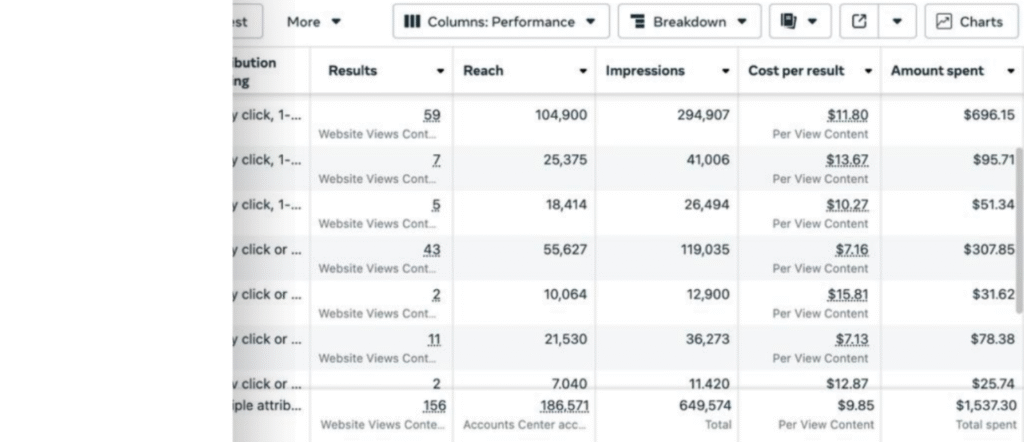
Similarly, for Google PPC, the algorithm will select a combination from pre-prepared objects: headlines, descriptions, phone numbers, addresses, etc. You will be able to see which headlines and elements attracted the most attention, which offers turned out to be more interesting for the audience, and brought more conversions at a lower cost.
It is worth reacting instantly: turn off ineffective ads or their groups, adapt successful campaigns and scale them – add more ads, multiply the offer, expand the number of audience segments, etc.
To remain competitive, a business needs to think like a consumer. Today, this means: respond quickly, change in time, collect and show reviews, speak humanely, and flexibly adjust advertising campaigns. Buyer behavior is no longer a stable value – and those who can adapt gain an advantage.
Do you want to quickly adapt to the modern market and start getting results right now? Entrust the setup of Google Ads and targeted advertising to AG.Marketing. We have Google Partners and Meta Partners status, as well as dozens of case studies in various niches. Your project will be managed by certified specialists and marketers, ensuring you stay ahead of trends and are among the first to achieve maximum results – even in a rapidly changing market.
Predict behavioral trends and be ahead of the market thanks to flexible advertising settings in Google & Meta from AG.Marketing. Leave a request to get a free consultation and calculation of media plans for your business.