
A true brand is the emotion people feel when they interact with you. It’s trust, relatability, associations, and feelings. If a person doesn’t feel anything when they see your logo – you don’t have a brand yet.
This article will help you understand how to create a pretty cover and a real brand that resonates with your audience. We will talk about brand elements, emotional perception, the role of storytelling in marketing, brand voice and tone, brand image as well as how to promote your ideas through social media branding.
What is a brand identity and why it’s not just a logo
What is brand identity? Brand identity is a holistic view of a brand that is formed in the minds of consumers through communication, experience, emotion, as well as visual and behavioral elements. It’s more than a set of visual symbols – it’s the audience’s perception in terms of brand personality, tone, attitude and interaction.

A brand’s identity defines its character: how it looks, sounds, speaks, and behaves in every channel, from its website to social media. It is the basis for long-term positioning and building trust.
Brand identity includes:
- visual attributes (logo, colors, fonts);
- verbal characteristics (tone of voice, slogans, name);
- behavioral models (way of communicating with customers, service, response to feedback);
- the company’s values and mission;
- emotions that the brand evokes at every stage of interaction.
The main goal of brand identity is for people to easily recognize your brand, understand what it is about, and have clear associations with it. Brands with a strong identity have a clear image, are easily distinguishable from competitors, and evoke genuine emotions that are trusted.
Elements of brand identity
Brand identity is made up of details that may seem insignificant at first glance, but they create a holistic impression. It’s like a person’s body language: even if they are silent, they still convey their mood, values, and character.
Visual elements
- A logo is a symbolic image that is easily recognizable;
- Colors – a palette that evokes certain emotional associations;
- Fonts – typography that emphasizes the brand’s tone of voice.
Keep in mind that the peculiarity of visual elements lies in their ease of perception and reproduction. Your logo should look equally good on physical media, on your Instagram avatar, and in the header of your website. It should be easy to reproduce, remember, and read.
Verbal elements
- Brand name – should be concise, easy to remember and relevant;
- Slogan – a short message that conveys the brand’s value;
- The tone of voice – a communication style that reflects the brand personality. For example, friendly, expert, inspirational, or professional.
It is important to ensure that the tone of voice is consistent and appropriate across all communication channels. For example, if a toy store uses an overly formal and professional tone, it will not be associated with joy, fun, and other emotions that are “sold” in this niche. On the other hand, a serious tone would be appropriate for a lawyer or financial advisor.
Behavioral elements
- Customer interaction – how the brand responds to inquiries, handles feedback, and solves problems;
- Service – quality of service, speed of response, customer care;
- Social media presence – activity, style of content delivery, marketing approach to interaction with the audience.
Together, these elements create a unique brand character, one that inspires sympathy, trust, and a desire to return. After all, a true connection is born not only through the logo but through the emotions it evokes.

How emotional brand perception is formed
Emotional brand perception is how a brand makes a person feel. It is the impression that remains in the mind of the consumer after each contact with the brand. Successful brands don’t just sell a product or service, they inspire trust, inspiration, admiration, or even pride. This is what forms a deep connection between the brand and its audience.
How emotions work in branding
Emotions are formed instantly and automatically, even before logic kicks in. In marketing, this means that a consumer can feel sympathy or antipathy for a brand before they even get to know its offer. This emotional response often determines further behavior, whether a person stays with the brand or goes to a competitor.
The main factors that influence the emotional perception of a brand
- Authenticity. A brand has to be genuine. The modern consumer can sense falsity well, so artificial emotions and marketing templates no longer work. Frankness, openness to dialogue, and sincere stories are what inspire trust.
- Consistency. If a brand is consistent in its communication, visual style, and tone of voice, it creates a clear image of the brand. Even the slightest contradictions can cause doubts among consumers.
- Brand storytelling. People remember stories, not facts. If a brand can tell an inspirational, sincere, or relatable story, it will win a place in the heart of the customer.
- Values and social stance. Modern brands should be not just sellers, but active participants in public life. Support for social initiatives, and transparent environmental or ethical policies create a positive emotional image.
- Emotional design. Design that evokes positive emotions: from colors and typography to animations and sound – everything should work to create an emotional background.
How to build emotional connection in practice
Emotional connection is not magic, but the result of conscious actions. To form this connection, you need to work systematically. Save this short plan and put it into action!

Remember: the most effective marketing is the one that leaves an emotional footprint. Brands that rely only on logic are inferior to those that speak the language of feelings. Emotions build loyalty. Identity at this level is not just a set of elements, but a real experience that shapes attitudes for years to come.
The role of the tone of voice, storytelling, and values in identity formation
Let’s take a closer look at each of the elements that make up brand identity.
Tone of Voice (ToV)
What is the brand tone of voice? The tone of voice is an emotional tool that helps a brand to be ‘alive’. It sets the tone of voice for all communication, from social media posts to website text and leaflets.
Tips for developing ToV:
- Define who your brand is: friend, mentor, expert?
- Align your communication style with your target audience;
- Take context into account – different platforms require different pitches.
Storytelling
What is brand storytelling – it’s not just a buzzword. It’s a powerful tool that turns dry information into a vivid experience. People love stories because it is through them that we feel, empathize, and get to know ourselves. A good story can do more than an advert: it engages the imagination, holds attention, and is memorable.
In branding, storytelling helps to show value through the customer’s experience, rather than just talking about the product. This is the moment when a company stops being faceless and becomes part of real life.
Components of an effective story:
- The hero is your customer;
- Problem – his pain or challenge;
- Solution – your product or service;
- Transformation – the result after use, a new state.
That’s why reviews and case studies work so well: you show a real-life story of how your product or service helped solve a real person’s problem. Other people can recognize their own story in this, and therefore feel confident in your offer.
Values
Values are the heart of a brand. They shape its character, behavior, communication style, and even the choice of partners. They are not just pretty phrases in a presentation or on the ‘About Us’ page – they are what the brand demonstrates in its daily actions.
Brand values answer the question: why are we doing this? And if a brand truly lives these principles, it’s impossible not to notice.
Example: A company claims to care about the environment, but packs products in plastic – this is questionable. But a brand that supports eco-initiatives, shares reports, and implements sustainable practices – builds trust and respect.
Why a brand needs values:
- Help make decisions – from strategy to design;
- Unite the team – create an internal culture;
- Attract ‘their’ customers – those who share these principles;
- Serve as a filter – keep you from compromising your conscience.
Brand values = accountability + consistency. If you talk about inclusion, the team, content, and service should support that. If you talk about innovation – you can’t stand still.
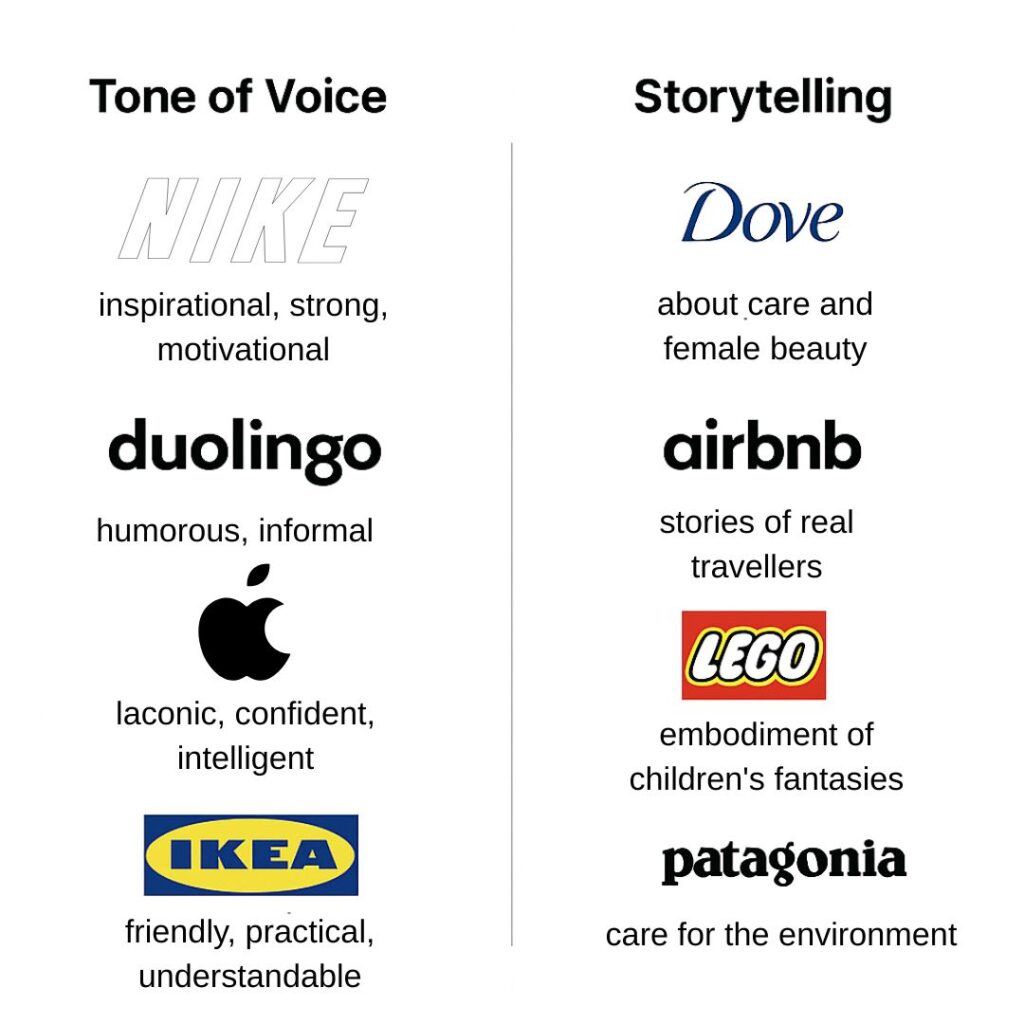
Values are your brand in action. They speak louder than a slogan and leave a deeper impression than an advert. They create the emotional foundation for loyalty and a long-term relationship with your customers.
How SMM helps to tell the brand story and create a connection with the target audience
SMM is a space for dialogue, live emotions, storytelling, and building brand identity in the minds of customers. Social networks have become the main channel of communication with the audience for a brand. It is here that trust, emotional involvement, and loyalty are formed.
How SMM builds an emotional image
Social media is the place where a brand can be real: show its face, tell stories, and listen to customers. It is a daily communication that builds the tone of voice and emphasizes the company’s values.
The core functions of SMM:
- Supporting the tone of voice – the style of communication in Instagram, Facebook, and TikTok should be consistent and in line with the chosen strategy;
- Storytelling – stories, posts, videos, reels – this is a form of modern storytelling;
- Reacting to events – comments on social topics, and participation in cultural trends form the image of a ‘live’ brand;
- Audience engagement – comments, polls, and UGC content (user-generated content) all enhance emotional engagement.
It is on social media that a brand can get closer to its audience and engage in live communication, broadcasting its advantages, approach, and ways of solving potential customers’ problems.

Types of content that reinforce brand identity on social media
Value posts. Tell what the company believes in, what priorities it has, and what it stands for.
Example: ‘We’re not just a brand. We are a team that believes in the power of good deeds. We donate a portion of the profits from each order to support the Education for All initiative.’
Behind-the-scenes content – working moments, teamwork, the inner life of the brand.
Example: ‘This is how our new fragrance is born. Watch as we test each note together with the team.’ + short video.
Customer stories: testimonials, case studies, and stories of transformation through the product.
Example: ‘Anna started training with us 6 months ago. Today she ran her first marathon. Her story is in our carousel.’
Educational and entertaining content: useful tips, how-to guides, fly hacks, and humor.
Example: ‘3 easy ways to keep your shoes in winter – save yourself!’ or ’Funny phrases our courier hears’
Gamification. Interactives, games, quizzes, competitions.
Example: ‘Guess 5 ingredients of our new smoothie and get a discount! Write in the comments.’
Building a connection with your target audience through social media
To build a true emotional connection with your target audience on social media, it’s important to move in stages:
- Attracting attention. At this stage, it’s important to stand out. Vivid visuals, emotional videos, catchy headlines, memes, or riles can get the user interested in the feed.
- Deepening interest. Once the first contact has been made, you need to build on it. Brand stories, employee stories, and more meaningful posts with value all help to keep attention.
- Building trust. Social proof, expertise, and honesty in communications build trust. Use testimonials, behind-the-scenes content, expert opinions, and UGC.
- Create an emotional connection. At this stage, it’s important to create a sense of engagement. Personal stories, thanking customers, engaging in social topics, humor, or inspiration all build an emotional response.
- Building loyalty and ambassadorship. Once a connection is made, it’s important to maintain it. Create communities, thank active followers, and involve them in content creation. This increases engagement and builds true brand advocates.
SMM is a powerful resource for building an emotional brand. Don’t reduce it to just advertising or informing. It is the platform where a brand comes to life and becomes closer, recognizable, and loved.
Remember: building an emotional connection with your audience is the foundation for building trust, loyalty, and a real, recognizable brand.
The bottom line
A brand that has a clear emotional identity becomes more than just a business, it becomes a value. Such a brand not only sells but also inspires, influences choices, and builds relationships that last for years. It is the key to a long-term position in the marketplace and people’s hearts.
True branding is not about a logo and colors. It’s about creating a complete experience that evokes emotions, forms associations, and leaves a mark on the heart of the customer. Brand identity is a combination of visual, verbal, and behavioral elements that must work as a unified system. But the most powerful tool remains the emotional connection.
To create a brand that is loved and remembered, it is important to consider:
- consistency of communication;
- the values that the brand conveys;
- a real, human tone of voice;
- quality storytelling;
- active interaction with the audience on social media.
Don’t stop at the logo. Brand building is a strategy that requires systematicity, consistency, and sincerity. It is an ongoing process involving analytics, customization, and customer care at every stage of interaction.
Everything mentioned in this article can be taken as a guide – a kind of map to help you understand how to build a brand with character, values, and emotional depth.
By the way, we have detailed a step-by-step algorithm for launching and promoting a brand in our article: How to create and promote your brand.
If you want your brand to speak with a voice that is heard and create emotions that are memorable – contact AG.Marketing. We can help you create a brand that lives in people’s hearts, not just on labels.
We focus on KPIs that are important for your business. Lead generation, page promotion, brand strategy development on social media – full support. Leave a request to get a free consultation from our marketer!